Open Nav

Your cart is currently empty.

Go To Shop

Prostate Cancer and Rehabilitation

Prostatectomy Patients

How Prostate Cancer Treatments cause Erectile Dysfunction

Erectile dysfunction (ED) following prostate cancer treatment results from injury to the neurovascular, vascular, and hormonal mechanisms required for erection.

Radical prostatectomy commonly causes ED through damage to the cavernous nerves that run in close proximity to the prostate and mediate nitric oxide–dependent smooth muscle relaxation. Even with nerve-sparing techniques, neuropraxia, traction injury, or thermal damage can occur, leading to reduced penile oxygenation, smooth muscle apoptosis, and subsequent corporal fibrosis. Arterial insufficiency may also result from disruption of accessory pudendal vessels.

Radiotherapy causes ED primarily via progressive vascular and endothelial injury. Radiation induces microvascular damage, reduced nitric oxide bioavailability, and fibrosis of the corpora cavernosa and penile vasculature. Neural injury is typically delayed and cumulative, explaining the gradual onset of ED months to years post-treatment.

Androgen deprivation therapy causes ED through profound testosterone suppression, leading to reduced libido, impaired nitric oxide synthase activity, altered cavernosal smooth muscle function, and structural penile changes. Hormonal deprivation also exacerbates metabolic and vascular dysfunction, further impairing erectile capacity.

Fighting Prostate Cancer:

A Survival Guide by Dr. Jyoti Shah MBE

CLICK HERE - A survival guide to help men understand a little more about prostate cancer and how it is diagnosed. The easy-to-follow language is aimed at men and their families to help them navigate the maze of treatment options that will be made available in a constantly changing field and to appreciate and manage the uncertainties that shroud prostate cancer.

Penis gym image for website.jpg

The Penis Gym

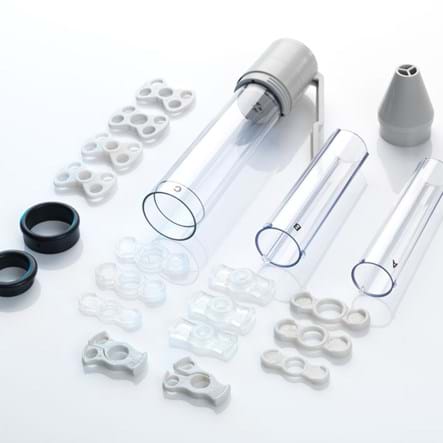
Penile rehabilitation via SOMAerect

Prostate cancer is now the most common cancer in men in the UK. Over 47,000 men are diagnosed with prostate cancer every year – that's 129 men every day. 1 in 8 men will get prostate cancer in their lifetime. Over 330,000 men are living with and after prostate cancer. Vacuum Erection Device penile structural rehabilitation / therapeutic application post-prostatectomy is also well established and supported by the BSSM / MacMillan / PCUK. Regular V.E.D. usage equates to a penile gym effect – oxygenation and mechano-receptor stimulation (which has an anti-apototic effect) prevents dis-use atrophy (cavernosal fibrosis) and reverses penile shrinkage: a recent study showed that vacuum erectile device (VED) therapy has improved erectile function and preserved penile size in rats with bilateral cavernous nerve crush (BCNC) injuries, using blood gas and tissue to samples to establish the beneficial effect of VED therapy is related to antihypoxia by increasing the cavernous blood oxygen saturation.


The concept of penile rehabilitation via SOMAerect customizable Vacuum Therapy is now widely accepted in clinical practice.

The goals of penile rehabilitation are to improve penile oxygenation, prevent programmed cell death and promote early recovery of erection. Currently penile rehabilitation methods include the use of phosphodi-esterase type 5 inhibitors, intra-cavernosal injection, vacuum erectile device or combination therapy. [1]

Early use of a SOMAerect Vacuum Therapy Device (VTD) following surgery facilitates early sexual intercourse, early patient/spousal sexual satisfaction, and maintenance of penile length/girth and, potentially, an earlier return of natural erections. Sexual activity that occurs during the first 9 months after surgery helps maintain the sexual interest and comfort between the couples that existed preoperatively. Patients who are motivated and sexually potent pre-operatively, and interested in maintaining post-operative potency should be encouraged for early prophylactic treatment options. The advantage of a VTD is that the erections produced are independent of endogenous vasoactive substance such as nitric oxide (NO) production, which is impaired by nerve damage. [2-5]

Vacuum therapy also appears to be more cost-effective compared with frequent use of oral medications or frequent penile injections. [6]

This therapy can also be used for patients with erectile dysfunction due to non-nerve sparing radical prostatectomy, radical cystectomy, rectal cancer surgery, radiation and cryrotherapy for prostate cancer, [16] regular device use maintaining penile size and preventing penile shrinkage. [6]

Road to recovery Jpeg web.jpg

SOMAerect Therapeutic Application - Protocol Details

1 - Assessment and device training by iMEDicare Technician 8 weeks post-surgery (radical prostatectomy) or shortly after radiotherapy. 2 - Daily SOMAerect Vacuum Device Therapeutic application for 10-20 minutes for 4 weeks. Daily program: 10-20 full erections consecutively (penis push-up) each to maximum filling comfortable and sustained at this level for not more than 5 secs in the device cylinder at full engorgement. Aim is to increase degree of filling with each progressive inflation incrementally in a way that remains comfortable. 3 - Sexual activity 4-6 weeks after initiation of program. 4 - Continued therapeutic SOMAerect application alternate days in the longer term. 5 - Monitoring of progress – spontaneous nocturnal or sexual erections? Full recovery?

x