
New UK Clinical Study Reports 89% Reduction in Urinary Leakage with PaceyCuff
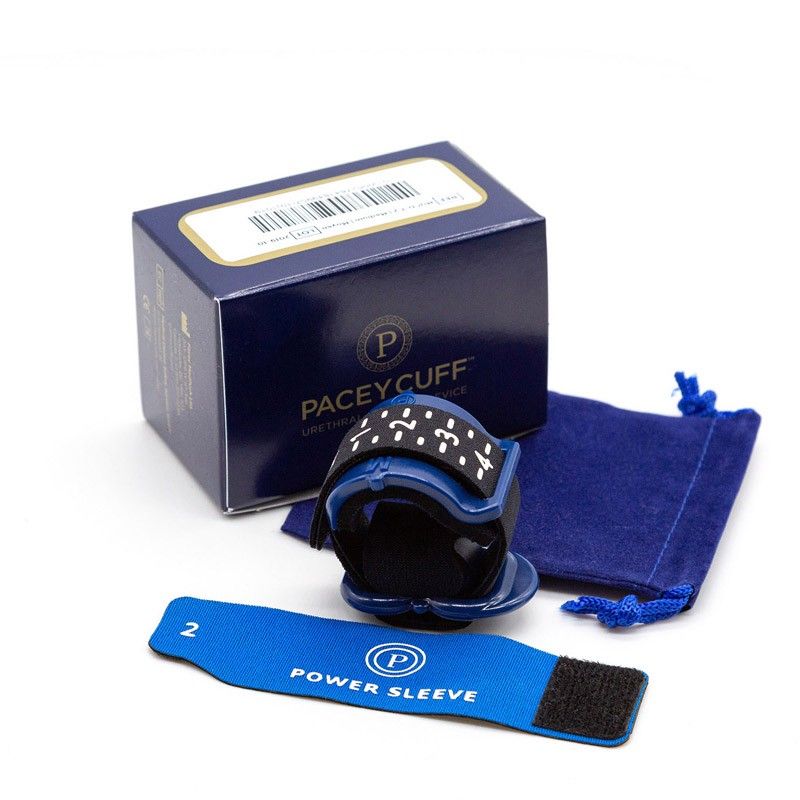
Royal Berkshire Hospital researchers report encouraging results for a non-surgical approach to managing male stress urinary incontinence.
Published: November 2026 | Clinical Research | Men's Pelvic Health
For men living with stress urinary incontinence (SUI), everyday activities such as walking, exercising, coughing or even leaving the house can become a source of anxiety. The condition is particularly common following prostate surgery and can significantly affect confidence, independence and quality of life.
Now, newly published UK clinical research offers encouraging evidence for an alternative approach to managing urinary leakage.
A pilot study conducted at Royal Berkshire Hospital, Reading, has reported an average 89% reduction in urinary leakage among men using the PaceyCuff, a discreet, adjustable external urethral control device.
Published on 23 September 2026 in the peer-reviewed journal Minimally Invasive Therapy & Allied Technologies, the research represents the first UK pilot evaluation of PaceyCuff's clinical outcomes, tolerability and potential short-term economic benefits.
What is male stress urinary incontinence?
Stress urinary incontinence occurs when urine leaks involuntarily during physical exertion or activities that increase pressure on the bladder, such as coughing, sneezing, lifting or exercising.
In men, SUI is frequently associated with prostate surgery, particularly radical prostatectomy, although other urological procedures and conditions can also contribute.
For some men, continence improves during recovery. Others experience persistent leakage requiring ongoing management.
Traditional approaches include pelvic floor muscle exercises, absorbent pads, external continence devices and, in selected cases, surgical interventions such as male slings or artificial urinary sphincters.
However, surgery is not suitable or desirable for everyone, and reliance on absorbent pads can be inconvenient, expensive and emotionally challenging.
This creates a need for effective, practical and non-surgical alternatives.
What is PaceyCuff Ultra?
PaceyCuff Ultra is a reusable, adjustable external urethral control device designed to help men manage stress urinary leakage.
Unlike absorbent pads, which collect urine after leakage occurs, the device applies controlled external compression to help prevent unwanted urine loss.
Its compact design offers a discreet option for men seeking greater confidence during everyday activities.
PaceyCuff is available in different sizes to accommodate individual anatomical requirements, with appropriate fitting and instruction being important for comfortable and effective use.
The device does not cure the underlying cause of incontinence, but may provide an additional conservative management option for suitable patients.
The UK clinical study: what did researchers investigate?
The research was undertaken by Clemence Musabyimana, Tarush Gupta and Bob Yang from the Department of Urology at Royal Berkshire Hospital.
The study enrolled 16 men with urodynamically confirmed stress urinary incontinence, with 14 included in the final analysis.
Participants had an average age of 74 years, ranging from 62 to 82 years. Most had previously undergone prostate surgery, and several had significant additional health conditions.
Researchers assessed:
-
Urinary leakage using a three-hour pad-weight test.
-
Daily use of absorbent incontinence pads.
-
Patient-reported urinary incontinence symptoms.
-
Quality-of-life outcomes.
-
Comfort, tolerability and short-term safety.
-
Potential reductions in expenditure on absorbent products.
Patients were assessed at baseline, during initial device use and through follow-up at two weeks and one month.
The results: substantial reductions in urinary leakage
One of the most striking findings was the reduction in measured urinary leakage during the three-hour pad test.
Average urine loss fell from approximately 94 grams without PaceyCuff to just 10 grams while using the device — an 89% reduction.
The reduction was statistically significant (p = 0.014), although the researchers emphasised that results from this small pilot study should be interpreted cautiously.
All 14 participants included in the final analysis experienced reduced urinary leakage during the test.
Fewer incontinence pads needed
Participants also reported a substantial reduction in their daily use of absorbent products.
Average pad consumption decreased from:
4.2 pads per day before using PaceyCuff to 1.7 pads per day after one month.
This represents approximately 60% fewer pads being used each day.
For men managing persistent incontinence, reducing reliance on absorbent products may offer practical benefits, including fewer pad changes, greater convenience and potentially lower ongoing expenditure.
Improvements in incontinence symptoms and quality of life
The researchers used established patient-reported questionnaires to assess changes in urinary symptoms and quality of life.
The International Consultation on Incontinence Questionnaire – Urinary Incontinence (ICIQ-UI) score improved from an average of 17.4 at baseline to 7.2 after one month.
Quality-of-life questionnaire scores also improved, falling from 12.5 to 2.9 over the same period.
These findings suggest that the reduction in leakage was accompanied by meaningful improvements in how participants experienced and managed their condition.
Importantly, PaceyCuff did not eliminate leakage entirely, and the study did not establish a cure for incontinence.
Was PaceyCuff comfortable and well tolerated?
Comfort and safety are important considerations for any external penile compression device.
In this pilot study, participants reported an average pain score of just 1.9 out of 10.
Two minor adverse events were recorded: a superficial skin abrasion and transient discomfort.
The researchers also measured penile oxygen saturation before fitting, immediately afterwards and following three hours of use. Measurements remained stable, and no short-term clinical signs of penile ischaemia were identified.
However, the authors cautioned that pulse oximetry is not a validated method of assessing penile tissue perfusion and that the safety of prolonged use has not yet been established.
Appropriate device selection, fitting, user instruction and adherence to the manufacturer's instructions remain essential.
Could PaceyCuff reduce the cost of managing incontinence?
Alongside the clinical outcomes, the researchers explored whether reduced pad consumption could translate into financial benefits.
Average weekly expenditure on absorbent pads decreased from approximately £42.34 to £17.95.
This represents a reduction of around £24 per week in the study population.
The authors also presented an exploratory calculation suggesting that reduced expenditure on pads could potentially offset the device purchase cost over time.
While encouraging, these findings should not be interpreted as proof of long-term cost-effectiveness. The study was relatively small, followed participants for only one month and did not undertake a comprehensive health-economic evaluation.
Nevertheless, the results raise an important question for healthcare providers and patients: could suitable reusable continence devices help reduce ongoing reliance on disposable absorbent products?
Further research will be needed to answer this.
An additional option for men who cannot undergo surgery
An important aspect of the Royal Berkshire evaluation was the inclusion of men with significant existing health conditions.
Some participants were considered unsuitable for surgical intervention, while others were awaiting surgery.
The researchers observed improvements in leakage outcomes across patients with different levels of comorbidity.
This suggests that PaceyCuff may warrant further investigation as an additional conservative management option for men who cannot undergo surgery, are waiting for treatment or prefer to explore non-surgical alternatives.
Individual clinical assessment remains important, as external urethral control devices are not appropriate for every patient.
Why this research matters
Male urinary incontinence can have consequences far beyond the physical experience of leakage.
It can influence clothing choices, exercise, social activities, travel, relationships and overall confidence.
For men recovering from prostate surgery, persistent urinary leakage may be particularly frustrating during what is already a challenging period.
Research into practical, non-invasive management options is therefore an important part of improving continence care.
The Royal Berkshire findings provide encouraging preliminary evidence that PaceyCuff may help selected men reduce leakage, use fewer pads and experience improvements in their quality of life.
However, the authors emphasised the need for larger, controlled studies with longer follow-up to establish the device's longer-term effectiveness and safety.
iMEDicare's commitment to evidence-based continence care
At iMEDicare, we believe that people living with urinary incontinence deserve access to practical, effective and evidence-informed treatment options.
We were pleased to support the Royal Berkshire Hospital research, while the study's investigators retained responsibility for its design, data collection, analysis and manuscript preparation.
We congratulate Clemence Musabyimana, Tarush Gupta and Bob Yang on their publication and their contribution to improving understanding of conservative male continence management.
We look forward to further research that builds on these preliminary findings and helps clinicians and patients make informed decisions about available treatment options.
Learn more about PaceyCuff Ultra
If you are experiencing urinary leakage following prostate surgery, or would like to explore non-surgical options for managing male stress urinary incontinence, PaceyCuff Ultra may be worth discussing with your healthcare professional.
Explore our range of men's continence management solutions at:
Read the original clinical publication
Musabyimana C, Gupta T, Yang B. (2026).
PaceyCuff for male stress urinary incontinence: first UK pilot evaluation of clinical outcomes and short-term cost offset.
Minimally Invasive Therapy & Allied Technologies.
Published online: 23 September 2026.
DOI: https://doi.org/10.1080/13645706.2026.2734261
Clinical information disclaimer: This article is provided for educational purposes and does not replace individual medical advice. The findings described are from a small, uncontrolled pilot study involving 14 analysed participants, with one-month follow-up. Longer-term safety and effectiveness require further investigation. Patients should consult an appropriately qualified healthcare professional before selecting a continence management device.